
Branded Environment Design: A Sign Shop Guide
 Jack KellyCo-Founder, Vuely
Branded environment design requires sign shops to manage complex mixed-material scopes. Learn how to estimate, survey, and install these projects profitably.
On this page
- The operational scope of branded environment design
- Estimating mixed-material scopes without losing margin
- Site surveys and catching architectural realities
- The 14 to 30 day paint rule for vinyl adhesion
- Transitioning from design intent to fabrication drawings
- Managing the installation alongside general contractors
- Frequently Asked Questions
Branded environment design is the integration of permanent graphic elements, dimensional signage, and architectural features into a physical space. For a sign shop, this means producing a cohesive package that includes wall murals, dimensional lettering, privacy window films, and backlit logos rather than just mounting a single cabinet sign above a door. The scope extends far beyond basic wayfinding.
The goal is to translate a brand director's concept into buildable shop drawings and a finished physical installation. While experiential design agencies focus on brand recall and multi-sensory spaces, sign shop owners, estimators, and project managers have to focus on material adhesion, wall blocking, and scheduling. Handling these multi-trade packages profitably requires specific approaches to estimating, site surveys, and installation project management. Transitioning from an architect's conceptual render to exact metal cuts and vinyl drops dictates whether a shop makes money on these complex jobs.
The operational scope of branded environment design
Experiential graphic design packages arrive at your shop differently than standard sign requests. Architects and agencies typically provide design intent drawings based on standards set by the Society for Experiential Graphic Design (SEGD). These documents show the visual concept, color palettes, and approximate sizes, but they rarely include the structural engineering or electrical requirements needed for fabrication.
It is the responsibility of the sign manufacturer to convert these concepts into exact fabrication drawings. The client expects the physical space to look exactly like the rendering, which means your shop has to figure out the invisible mounting hardware, electrical routing, and material thickness needed to make the illusion work.
Core components of these projects usually include:
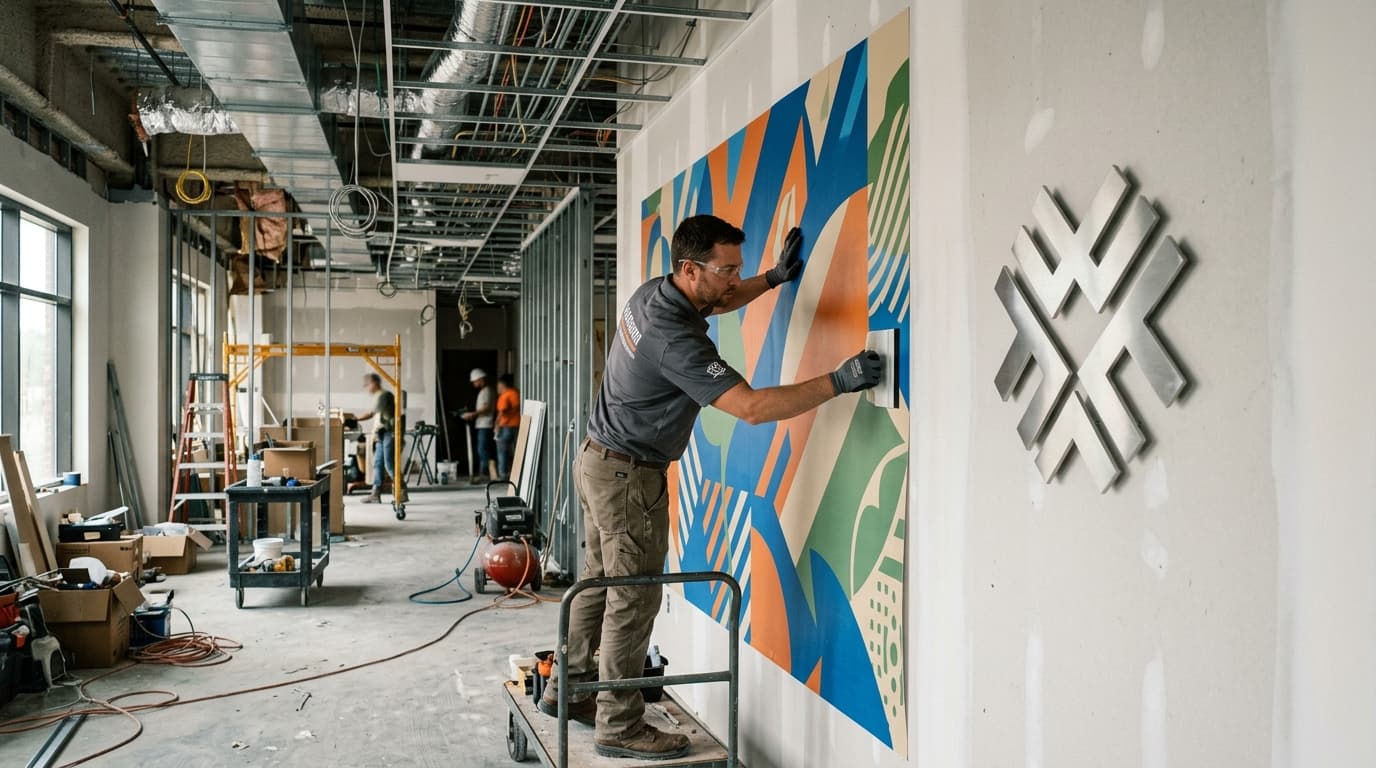
- Architectural finishes: Custom digital wall murals covering large spans of drywall, and decorative privacy window films for glass conference rooms.
- Dimensional features: CNC-routed acrylic or metal lettering, halo-lit logos, and acoustic felt panels mounted with standoffs.
- Functional signage: ADA compliant room identification suites and complex campus wayfinding systems.
- Structural elements: Donor recognition walls, history feature walls, and custom millwork integrations.
Each of these elements requires a different production method, but they all must be installed at the same time to finish the space.
Estimating mixed-material scopes without losing margin
Pricing a standard channel letter set is straightforward. Estimating a complete interior environment introduces variables that can quickly eat your profit margin. Estimators must budget for multiple trades, varied material types, and unpredictable installation hours within a single unified bid. You need clear sign estimating software processes to track every detail from routing to wide format printing.
Project values fluctuate wildly based on the structural requirements. Small corporate interior packages often range from $10,000 to $30,000. This usually covers a lobby logo, conference room frosted film, and a few hallway murals. Full multi-floor campus environments or flagship retail spaces routinely exceed $75,000 to $250,000. These larger figures depend heavily on structural engineering, custom architectural millwork, and complex lighting assemblies.
Material waste is a frequent blind spot for estimators new to experiential design. For large-scale wall graphics and printed window films, standard wide-format printing practice requires a 10 to 15 percent material waste buffer. This covers pattern matching, seam overlaps of half an inch to one inch, and print bleed. Failing to calculate this waste margin on a massive wall wrap means the shop absorbs the cost of the extra vinyl roll required to finish the final panels.
Site surveys and catching architectural realities
A conceptual PDF from a design agency assumes perfectly flat, plumb, and square walls. A physical site survey always reveals the reality. Project managers must measure exact wall dimensions, locate electrical hookups, and identify where general contractors have placed wood blocking behind the drywall to support heavy dimensional logos.
Collecting accurate site data on the first visit prevents expensive rework and stalled installations later. Field reps must take clear photos, measure floor angles, and record exact measurements of every surface slated for graphics or signage. Missing a hidden electrical panel or an uneven ceiling line means your shop drawings will be wrong.
Software helps bridge the gap between messy site conditions and the client's expectations. Vuely allows field reps to complete guided survey checklists, capture precise measurements with photos, and generate an instant AI mockup of the sign on the customer's actual interior walls. This lets the shop check local sign codes, estimate the pricing, and collect an electronic signature before the rep leaves the site. Vuely does not handle shop management, production operations, or design services, but it speeds up the initial survey and approval phase for complex interior packages.
The 14 to 30 day paint rule for vinyl adhesion
Adhesion failure is a primary risk when installing wall murals and large format graphics in new corporate environments. Modern commercial buildings rely on low-VOC and zero-VOC architectural interior paints. While these paints are better for the environment and building occupants, they require strict curing times before your installation crew can apply any vinyl graphics.
The industry standard cure time mandated by major material manufacturers is 14 to 30 days. If a general contractor demands you install vinyl before the paint fully cures, outgassing occurs. As the paint dries, it releases gases. If vinyl covers the paint, the trapped gas creates bubbles under the graphic and permanently breaks down the adhesive bond. The mural will fall off the wall.
Installers must also prepare the cured surface properly before application. Wiping the wall with a 70/30 isopropyl alcohol solution removes construction dust and chemical residue left by the paint. Skipping these steps leads to peeling edges, angry clients, and complete panel replacements that drain the project's profit. You can find more detail on managing these client expectations in our environmental branding guide.
Transitioning from design intent to fabrication drawings
When a sign shop wins an experiential graphics package, the engineering team must translate the SEGD design intent documents into actionable shop drawings. The design agency dictates the visual result, but the sign manufacturer owns the liability for how the materials are cut, assembled, and secured to the building.
This phase requires strict attention to material properties. A designer might specify a continuous brushed metal wall logo, but your production team knows that sheet metal only comes in specific standard sizes. The shop drawings must detail exactly where the seams will fall, how the backing structure will be hidden, and what mechanical fasteners will safely hold the weight without destroying the drywall.
You also have to verify regulatory compliance during this phase. Interior signage must meet the Americans with Disabilities Act requirements for tactile lettering, braille placement, and contrast. Wall murals often require specific fire safety ratings for the vinyl and laminate materials used in public corridors. Verify these details and document them clearly before sending any files to the router or the printer. Ensure your local permit team understands how to use a sign code checker if any elements face the exterior through windows.
Managing the installation alongside general contractors
Branded environment installations rarely happen in an empty, quiet building. Your crews will typically work on active construction sites alongside electricians, painters, and flooring contractors. Project managers have to coordinate the sequence of installation tightly to avoid damaging other trades' work or having your freshly installed graphics ruined by ongoing construction.
Follow these operational rules for site management:
- Verify site readiness: Do not schedule your installation crews until the general contractor confirms in writing that walls are painted, cured, and completely clear of scaffolding or debris.
- Document site conditions upon arrival: Take detailed photos of out-of-square walls, uneven floors, or existing drywall damage before your team unloads any materials.
- Handle change orders in writing: If site conditions deviate from the architectural plans, require a signed change order before modifying the fabrication or installation method on site.
- Protect finished work: If other construction trades are still active in the space, leave protective masking on dimensional acrylics, metals, and delicate prints until the building is ready to open.
Sign codes change and vary by zoning district and overlay. Confirm with the authority having jurisdiction before submitting a permit.
Frequently Asked Questions
What is the difference between branded environments and standard signage?
Standard commercial signage typically serves a single function, like a storefront sign or a standalone directional post. Branded environments combine two dimensional graphics, three dimensional signs, and architectural elements like acoustic panels across an entire space. The goal is to create a cohesive physical experience that reflects a corporate identity rather than just labeling a building.
Who owns the design intent versus the fabrication drawings?
Architects and experiential design agencies own the initial design intent, which shows the visual concept and layout. The sign manufacturing company owns the fabrication and engineering drawings. The sign shop takes full responsibility for how the materials are cut, assembled, wired for electricity, and mounted safely to the architectural structure.
How do you prevent wall vinyl from bubbling on new drywall?
You must wait 14 to 30 days for fresh paint to cure completely, especially in modern buildings using low-VOC architectural paints. If you install too early, the paint releases gases that get trapped under the vinyl, causing bubbles and adhesive failure. Clean the cured surface thoroughly with a 70/30 isopropyl alcohol solution before applying the graphics.
How much do corporate branded environment projects cost?
Small corporate interior packages typically range from $10,000 to $30,000 for basic lobby logos, window privacy films, and a few printed wall murals. Full multi-floor campus or flagship retail environments routinely range from $75,000 to well over $250,000. The final cost depends entirely on the amount of structural engineering, electrical integration, and custom architectural millwork involved in the scope.
What is the SEGD and how does it relate to sign making?
The Society for Experiential Graphic Design is the governing industry body that defines standard documentation practices for environmental graphics. Architects use SEGD standards to create programming, schematic design, and fabrication intent documents. Sign shops receive these documents and must translate them into the precise shop drawings used for actual manufacturing and installation.
See Vuely on your own storefront
Site surveys, instant mockups, and ready-to-sign proposals in minutes.